
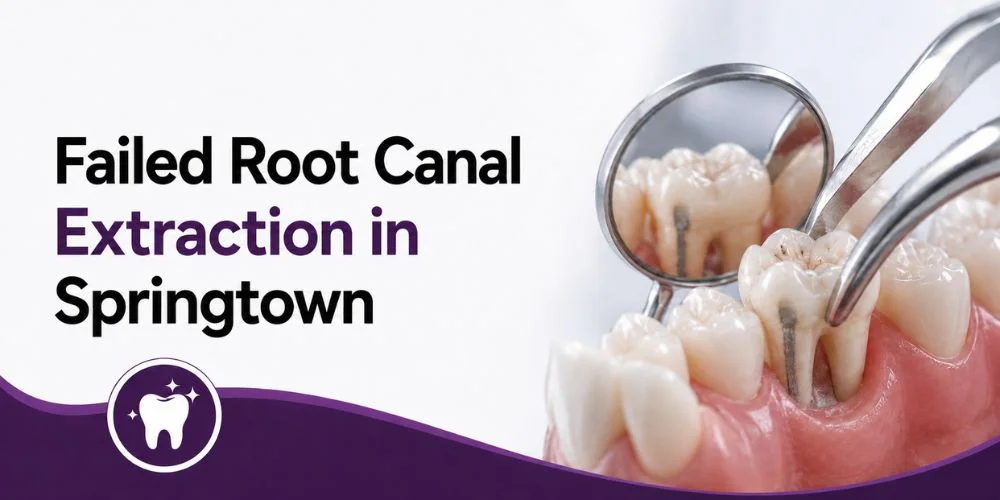
Pain returning in a tooth that has already undergone root canal treatment can be frustrating and may signal that the tooth has not healed properly. A new infection, hidden canal, damaged restoration, or tooth fracture may be responsible. When these problems develop, failed root canal extraction in Springtown may be considered, but extraction is not automatically the only treatment option.
At Frontier Dentistry, Dr. Caroline Miller, a dentist in Springtown, TX, evaluates previously treated teeth to identify the cause of recurring pain or infection. She can determine if the tooth may benefit from additional treatment or if removal is the more appropriate option based on its condition, surrounding bone, and long-term restorability.
What Is a Failed Root Canal?
A failed root canal occurs when a previously treated tooth does not heal properly or develops a new infection. Bacteria may re-enter the tooth because of hidden canals, new decay, a damaged filling or crown, or cracks in the tooth, causing pain, swelling, or tenderness to return.
A failed root canal does not always require extraction. Depending on the condition of the tooth and surrounding tissues, root canal retreatment or another dental procedure may help control the infection and preserve the natural tooth.
Causes of a Failed Root Canal
A root canal can fail for several reasons, even after the tooth has been treated. In some cases, bacteria remain inside difficult-to-reach canals or re-enter the tooth later, causing infection and inflammation to return. A best dental clinic in Springtown can evaluate the tooth and identify the underlying cause. Common causes may include:
Hidden or Untreated Canals
Some teeth have narrow or complex canal systems that may be difficult to treat completely. Bacteria left behind can lead to pain, swelling, or infection after the original procedure.
New Tooth Decay
Decay can form around an existing filling or crown and allow bacteria to enter the treated tooth again. Patients with recurring symptoms may need root canal treatment in Springtown to determine if the tooth can still be saved.
Damaged Filling or Crown
A loose, cracked, or leaking filling or crown may expose the treated tooth to bacteria. This can lead to reinfection and may require repair or additional treatment.
Tooth Fracture
Cracks can develop in a weakened tooth after root canal treatment. Small fractures may be manageable, while deeper cracks can make the tooth difficult to restore.
Delayed Permanent Restoration
Waiting too long for a permanent crown or restoration can leave the tooth vulnerable to leakage, fracture, and bacterial contamination.
Recurrent Infection
Infection can return around a previously treated tooth and cause pain, swelling, tenderness, or drainage. These symptoms may require emergency dentist care near Azle TX for timely evaluation.
Warning Signs Your Root Canal May Be Failing
A previously treated tooth can start showing warning signs when infection, inflammation, or structural damage returns. Paying attention to failed root canal symptoms early can help prevent the problem from becoming more serious and may improve the chances of saving the natural tooth. A root canal specialist in Springtown can evaluate the tooth, identify the cause of the problem, and recommend the most appropriate treatment based on its condition.
- Pain that returns after root canal treatment
- Pain when biting or chewing
- Swelling around the treated tooth
- Tender or inflamed gums
- A pimple or bump on the gum
- Bad taste or drainage near the tooth
- Tooth discoloration
- Increased sensitivity or pressure
- Facial swelling in more serious cases
Treatment Options for a Failed Root Canal
The failed root canal treatment depends on the cause of the problem, the remaining tooth structure, and the extent of infection or damage. In some cases, the natural tooth can still be preserved, when root canal extraction in Springtown may be recommended when the tooth is severely damaged or cannot be restored successfully. Common treatment options include:
Root Canal Retreatment
Root canal retreatment involves reopening the treated tooth, removing the existing filling material, and cleaning the canals again. It may help eliminate remaining bacteria and preserve the natural tooth when enough healthy structure remains.
Apicoectomy
An apicoectomy may be recommended when infection remains around the tooth root after root canal treatment. During the procedure, infected tissue and part of the root tip are removed to control the problem, making root canal treatment near Boyd TX an option when preserving the tooth is still possible.
Tooth Extraction
Tooth extraction in Springtown may be recommended when a tooth has a severe fracture, extensive decay, significant structural damage, or cannot be predictably restored. Removing the affected tooth helps eliminate the source of infection and reduces the risk of further dental complications.
Dental Implant
After extraction and appropriate healing, a dental implant may be recommended to replace the missing tooth. An implant can restore function, support normal chewing, and provide a stable replacement that closely resembles a natural tooth.
Dental Bridge
A dental bridge is another option for replacing a missing tooth after extraction. It fills the space using a replacement tooth supported by neighboring teeth, helping restore chewing function and maintain the appearance of the smile.
How to Prevent a Root Canal from Failing
Proper dental care after a root canal can help protect the treated tooth and reduce the risk of future infection or damage. Following your dentist’s instructions, maintaining good oral hygiene, and treating new symptoms early may also lower the likelihood of needing failed root canal extraction in Springtown.
- Brush twice daily and floss around the treated tooth.
- Complete the recommended permanent filling or crown on time.
- Avoid chewing hard foods with the treated tooth during healing.
- Attend regular dental exams and teeth cleanings.
- Report recurring pain, swelling, or tenderness early.
- Protect teeth from grinding or clenching when recommended.
- Maintain healthy gums to reduce bacterial buildup around the tooth.
Take Action Early to Protect a Failed Root Canal Tooth
Acting early can make a major difference when pain, swelling, or infection returns after root canal treatment. A timely dental evaluation helps determine if the tooth can still be preserved through retreatment or if failed root canal extraction in Springtown is the safer option based on the tooth’s condition.
Delaying care may allow infection or structural damage to become more severe, which can limit treatment choices. Early evaluation gives your dentist near Springtown TX the opportunity to compare available options, protect surrounding tissues, and recommend the treatment that best supports long-term oral health.
Protect Your Tooth Before the Problem Gets Worse
A failed root canal should not be ignored when pain, swelling, or infection returns. Early evaluation can help determine if the tooth can still be saved or if extraction is the better option for protecting your oral health. The best treatment decision can reduce further complications and support a healthier, more comfortable smile.
Book an Appointment at Frontier Dentistry
Experiencing pain, swelling, or other problems with a previously treated tooth? Schedule an evaluation for failed root canal extraction in Springtown with Dr. Caroline Miller at Frontier Dentistry to determine the most appropriate treatment for your condition.
Call 817-523-4648 to book an appointment today.