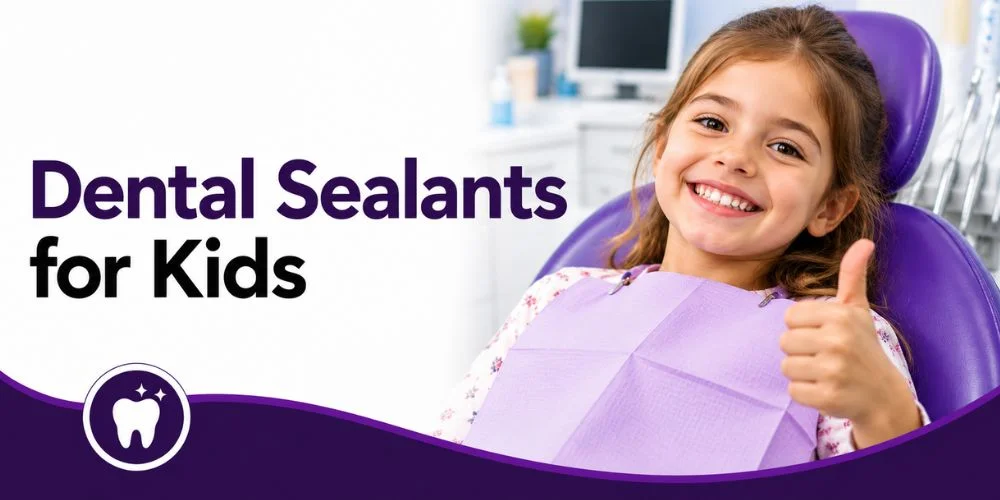
Cavities are common in children because bacteria feed on sugars and produce acids that can damage tooth enamel. Deep grooves in back teeth can also trap food and plaque, making these areas harder for kids to clean properly. In the U.S., about 11% of children ages 2–5 and nearly 18% of children ages 6–8 have untreated tooth decay. Dental sealants for kids add a protective coating to back teeth, helping block cavity-causing bacteria and food particles from settling into these vulnerable grooves.
At Best Dentist in Texas, we help parents understand preventive dental options that support healthier smiles as their children grow. Families in Dallas, Seven Points, Murphy, Springtown, and surrounding areas can rely on our dental team for preventive care focused on protecting young teeth from decay. Dental sealants can be a good option for protecting cavity-prone back teeth, giving children added protection while supporting better oral health during their growing years.
What are Dental Sealants?
Dental sealants are thin, protective coatings applied to the chewing surfaces of back teeth, where tiny grooves and pits can easily trap food particles and bacteria. Even with regular brushing, these narrow spaces can be difficult to clean properly. Sealants cover these vulnerable areas with a smooth protective layer, making it harder for cavity-causing bacteria to settle and helping teeth stay healthier for longer.
Dental sealants offer a quick, comfortable, and non-invasive way to protect teeth from decay. They form a smooth barrier over cavity-prone grooves, helping prevent food particles and bacteria from settling in hard-to-clean areas. The application requires no drilling or removal of healthy tooth structure. Sealants are commonly used for children and teenagers, when adults with deep grooves or cavity-prone teeth can also benefit from this added protection.
How Dental Sealants Work
Dental sealants in Dallas protect the grooves and pits of teeth by creating a thin barrier against food particles, bacteria, and cavity-causing acids. The process is simple, comfortable, and usually completed in just a few steps:
Step 1: Cleaning the Tooth
The tooth is thoroughly cleaned to remove food particles, plaque, and debris from the chewing surface.
Step 2: Preparing the Surface
A special solution is applied to the tooth to prepare the surface and help the sealant bond securely.
Step 3: Applying the Sealant
The liquid sealant is carefully placed into the natural grooves and pits where bacteria can easily collect.
Step 4: Hardening the Sealant
A curing light is used to harden the material, forming a strong protective layer over the tooth.
Step 5: Checking the Protection
The best dentist in Dallas checks the sealed tooth and bite to make sure the sealant is properly placed and feels comfortable.
The Sealant Application Process
The dental sealant application process is quick, painless, and does not require drilling or anesthesia. A dentist in Murphy, TX carefully prepares each tooth before applying the protective material, helping the sealant bond securely with the chewing surface and cover cavity-prone grooves.
| Step | What Happens |
|---|---|
| 1. Tooth Cleaning | The tooth is cleaned thoroughly to remove plaque, food particles, and debris from the chewing surface. |
| 2. Tooth Preparation | A special solution is placed on the tooth for a short time to prepare the enamel and help the sealant bond properly. |
| 3. Rinsing and Drying | The tooth is rinsed and completely dried so moisture does not interfere with the bonding process. |
| 4. Sealant Application | A thin layer of dental sealant is applied directly into the deep pits and grooves of the chewing surface. |
| 5. Curing the Sealant | A special curing light hardens the sealant, creating a protective barrier over the tooth within seconds. |
| 6. Final Bite Check | The dentist checks the sealant and bite to make sure the treated tooth feels comfortable and the coating is properly positioned. |
Benefits of Dental Sealants for Kids
Dental sealants give children’s teeth an extra layer of defense during the years when cavities are more likely to develop in deep grooves and hard-to-clean areas. Dental Sealants for Kids in Springtown help shield these vulnerable chewing surfaces from food particles and cavity-causing bacteria, supporting healthier smiles while reducing the chances of decay and the need for fillings or other restorative dental treatments.
Some of the top benefits include:
- Helps prevent cavities in hard-to-clean molars and premolars
- Blocks food particles and bacteria from settling into deep tooth grooves
- Requires no drilling and can be applied quickly and comfortably
- Provides lasting protection when combined with good daily oral hygiene
- Helps preserve healthy tooth structure by lowering the risk of decay
- Offers a safe preventive dental option for children and growing smiles