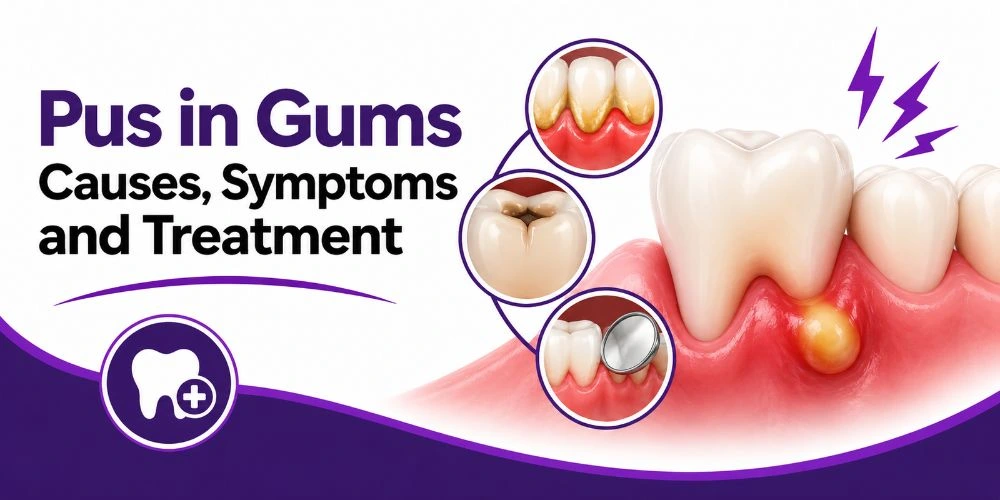
A small, painful bump on your gums may seem harmless, but it could signal a bacterial infection developing beneath the surface. Pus in gums often forms when bacteria become trapped around a tooth or inside infected gum tissue. The resulting swelling and pressure can cause throbbing pain, difficulty chewing, interrupted sleep, and potentially serious complications if treatment is delayed.
A small gum infection can quickly become a serious dental concern, damaging the tissues and bone supporting your teeth if left untreated. At Texas Smile Dental Center, Dr. Noman Hussain, Dr. Hassan Asghar, and Dr. Ans Athar provide dental care focused on identifying infections and protecting oral health. Our dentists in Dallas, TX, evaluate the source of infection and recommend appropriate treatment to help relieve pain and prevent complications.
What Causes Pus to Form in the Gums?
Pus forms when the immune system responds to a bacterial infection, causing white blood cells and bacteria to accumulate. This can create a gum abscess, a swollen pocket of infection near a tooth. Identifying the cause helps determine appropriate gum abscess treatment in Dallas, TX. Several dental conditions can contribute to pus formation, including the following.
Poor Oral Hygiene and Plaque Buildup
Skipping brushing or flossing allows dental plaque to accumulate around the teeth and gumline. Plaque contains bacteria that can irritate gum tissue and contribute to inflammation. Without proper cleaning, plaque may harden into tartar, increasing the risk of gum disease and infection. Over time, untreated bacterial buildup can contribute to swollen gums with pus.
Advanced Gum Disease (Periodontitis)
Periodontitis develops when ongoing gum inflammation damages the tissues and bone supporting the teeth. Deep periodontal pockets can trap bacteria, causing pus, swelling, tenderness, bad breath, and loose teeth. Periodontics in Dallas TX, focuses on diagnosing and managing gum disease to help control infection, protect supporting tissues, and maintain oral health.
Untreated Tooth Decay and Cavities
A deep cavity can allow bacteria to reach the inner pulp of a tooth, where nerves and blood vessels are located. As infection progresses, it may spread through the root and into surrounding tissues, creating a tooth abscess with pus. Severe toothache, sensitivity, and swelling near the affected tooth are common warning signs.
Cracked or Damaged Teeth
A cracked tooth can create an opening through which bacteria enter the inner tooth structure. Even a small fracture may allow infection to develop beneath the surface. As bacteria spread toward the root, a painful swelling or pus-filled bump on gums may appear. Early dental examination can help determine the extent of the damage.
5. Food Trapped Between Teeth and Gums
Food particles trapped beneath the gumline or inside an existing periodontal pocket can contribute to localized inflammation and bacterial infection. Patients may notice tenderness, swelling, or pain when chewing. If infection develops, a gum boil may form near the affected area. Dental cleaning and treatment of the affected gum pocket may be necessary.
Failed or Damaged Dental Restorations
Broken fillings, loose crowns, or poorly fitting dental restorations can create spaces where bacteria and food particles accumulate. In some cases, decay develops beneath an existing restoration and eventually affects the tooth pulp. This may lead to a dental abscess or recurring gum swelling. A dental examination helps identify the underlying problem.
7. Partially Erupted Wisdom Teeth
A partially erupted wisdom tooth may leave a flap of gum tissue covering part of the tooth. Bacteria and food particles can become trapped beneath this tissue, causing an infection called pericoronitis. Symptoms may include swollen gums, unpleasant taste, difficulty chewing, and sometimes pus. Severe cases can cause jaw swelling or difficulty opening the mouth.
Common Symptoms of Pus in Gums
A gum abscess may begin as a small swollen area and develop into a painful infection. A visible bump, toothache, or pressure around the affected tooth can indicate an underlying problem. A dental infection in Dallas, TX, requires timely evaluation, particularly when swelling or pain increases. Common warning signs include:
- A painful, swollen bump near the affected tooth
- Yellow or white pus draining from gum tissue
- Throbbing toothache that interrupts sleep and daily activities
- Red, tender, or swollen gums around infected teeth
- Chronic bad breath or unpleasant taste inside mouth
- Increased tooth sensitivity when eating hot or cold
- Pain or pressure when biting and chewing food
- Swelling around the jaw, cheek, or nearby glands
Why You Should Never Pop a Gum Abscess at Home
A swollen, pus-filled bump on the gums may seem easy to drain at home, but popping a gum abscess can damage surrounding tissues, introduce more bacteria, and worsen the infection. Even when pus drains naturally, bacteria may remain inside the tooth or gums, allowing the infection to return or spread.
Temporary pain relief does not mean the abscess has healed. Without proper treatment, the infection may damage surrounding bone or spread into nearby facial tissues. Using needles, sharp objects, or pressure to drain pus is unsafe. A dentist near Dallas TX, can identify the source of infection and recommend appropriate treatment.
Dental Treatments for Pus in Gums
The appropriate treatment for pus in gums depends on the infection’s location, severity, and underlying cause. At Texas Smile Dental Center, patients can discuss gum infection treatment in Dallas, TX, following a dental examination and any necessary imaging.
Dental Abscess Drainage
When an abscess contains trapped pus, a dentist may make a small opening or drain the infection through an existing periodontal pocket. This helps release pressure and remove infected material. Additional treatment is usually needed to eliminate the underlying source of infection and reduce the chance of recurrence.
2. Scaling and Root Planing
For infections associated with periodontal disease, deep dental cleaning may be recommended. Scaling removes plaque and tartar from tooth surfaces and beneath the gumline, and root planing smooths affected root surfaces. This treatment helps control bacterial buildup and supports gum healing.
3. Root Canal Treatment
When bacteria infect the inner pulp of a tooth, root canal treatment may help save the natural tooth. The procedure removes infected pulp tissue, cleans the root canals, and seals the tooth. A crown or other restoration may be recommended afterward to protect the treated tooth.
4. Tooth Extraction
A severely damaged tooth may require extraction when it cannot be restored. Removing the infected tooth eliminates the source of infection, although drainage or additional treatment may also be necessary. The dentist can discuss suitable tooth replacement options after evaluating the patient’s oral health.
5. Antibiotic Medication
Antibiotics may be prescribed when a gum infection spreads or causes fever. Antibiotics for a gum abscess cannot replace dental treatment. The American Dental Association recommends treating the source of infection and limiting routine antibiotic use for localized dental abscesses.
What Happens If Pus in Gums Is Left Untreated?
Ignoring pus in gums can lead to serious dental problems, including gum tissue damage, jawbone loss, recurring infections, and tooth loss. Even when pain decreases, bacteria may continue spreading beneath the gums. Severe infections can extend into nearby facial or neck tissues, increasing the risk of complications.
An untreated gum abscess can also affect daily life by making chewing painful, interrupting sleep, and causing persistent swelling. A small gum boil may indicate a deeper infection around the tooth root. Early dental evaluation can help prevent further damage and protect oral health.
How to Prevent Gum Abscesses and Recurring Infections
Preventing gum infections starts with proper oral hygiene and regular dental care. Brushing twice daily with fluoride toothpaste, flossing, and scheduling regular dental cleanings help remove plaque and bacteria. Treating cavities and gum disease early can reduce the risk of recurring abscesses.
Cracked teeth, bleeding gums, and chronic tooth sensitivity should never be ignored. Managing existing dental problems and avoiding tobacco can also support healthier gums. A dental checkup in Dallas TX, can help detect early signs of infection, periodontal pockets, and tooth decay before complications develop.
Get Relief From Gum Infections at Texas Smile Dental Center
Pus in gums can be a warning sign of a bacterial infection that requires dental attention. Untreated cavities, advanced gum disease, and damaged teeth can lead to painful abscesses and serious oral health problems. Early diagnosis and appropriate treatment can help relieve pain, control infection, and protect your natural teeth.
At Texas Smile Dental Center, Dr. Noman Hussain, Dr. Hassan Asghar, and Dr. Ans Athar provide dental care for various oral health concerns. Our gum abscess treatment in Dallas, TX, focuses on identifying infections, relieving pain, and protecting oral health. Book your appointment today or call +1 214-275-0172 to discuss your symptoms and take the next step toward healthier teeth and gums.
Frequently Asked Questions
Can you get pus in your gums?
Yes, pus in gums can develop when bacteria cause an infection around a tooth or within gum tissue. This may form a gum abscess, leading to swelling, pain, redness, and an unpleasant taste. A dental examination helps identify the infection and determine appropriate treatment.
Do antibiotics get rid of pus in gums?
Antibiotics may help control a spreading gum infection, but they usually cannot eliminate the underlying cause of a gum abscess. Dental treatments such as abscess drainage, deep cleaning, or root canal therapy may be necessary. A dentist determines if antibiotics are needed based on the severity of the infection.
3. How can I get rid of pus in my gums?
Getting rid of pus in gums requires treating the underlying infection. A dentist may recommend abscess drainage, deep dental cleaning, root canal treatment, or tooth extraction, depending on the cause. Warm saltwater rinses may temporarily soothe irritated gums but cannot cure the infection.
How do you get rid of pus in your gums?
The safest way to remove pus from gums is through appropriate dental treatment. A dentist examines the affected area, identifies the source of infection, and may drain the abscess or treat the infected tooth. Avoid squeezing or puncturing the swollen gum, as this can worsen the condition.
How to cure pus in gums?
Treating pus in gums involves eliminating the bacterial infection and its underlying cause. Depending on the diagnosis, treatment may include scaling and root planing, abscess drainage, root canal therapy, or extraction. Early dental care helps reduce pain, protect surrounding tissues, and prevent recurring infections.